
Key Takeaways
- Synthetic fibers need high-temperature machines with steady fluid flow to ensure deep, even color.
- Cotton yarns require automated dosing systems to control chemical usage and improve color accuracy.
- Mills save water and electricity by choosing energy-efficient machines with low liquor ratios.
Selecting a Yarn Dyeing Machine for Synthetic Fibers
HTHP Requirements for Polyester Yarns
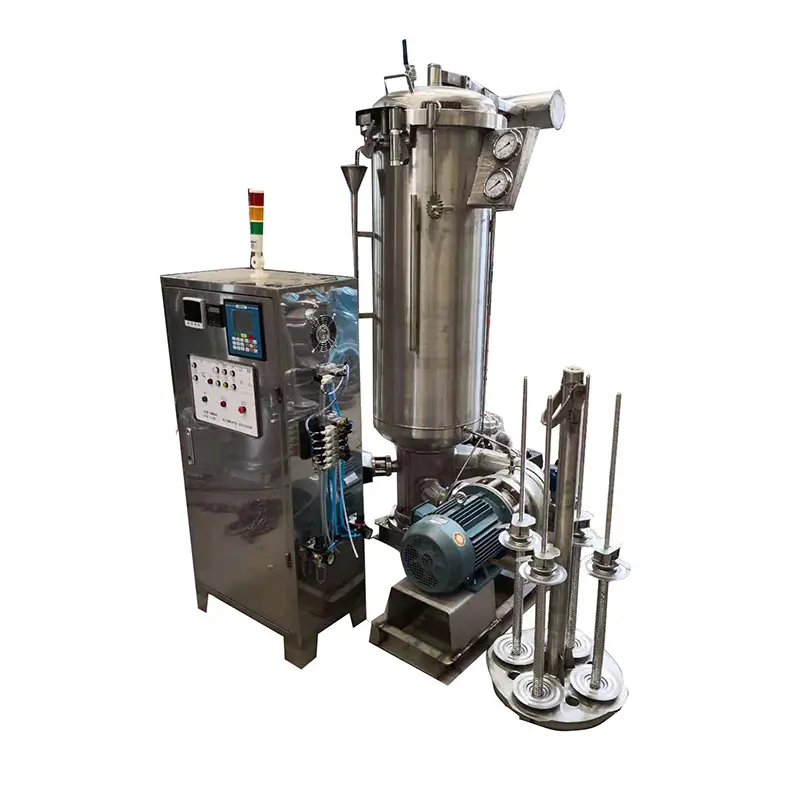
Polyester fibers possess a tight crystalline structure. Standard atmospheric dyeing cannot push disperse dye molecules into the fiber core. Synthetic processing requires a specialized high-temperature high-pressure HTHP yarn dyeing machine to expand the tight polymer chains. High thermal energy opens the molecular matrix of the fiber, allowing disperse dye particles to diffuse deep inside uniformly.
The processing parameters for polyester package dyeing demand strict control over bath temperature and vessel pressure to achieve optimal dye fixation.
| ParameterValue | |
|---|---|
| Temperature range | 125°C – 135°C |
| Common hold temperature | 130°C |
| Pressure range | 2 – 3 bar |
Maintaining precise thermal stability prevents shade variations across the inner, middle, and outer layers of the package. Controlled heating rates also preserve structural yarn integrity during high-temperature cycles.
Liquor Circulation for Nylon Yarns
Nylon yarn contains polar amide groups with a very high affinity for acid dyes. Rapid dye absorption often causes surface streaking or unlevel shades. Machinery for nylon yarn processing must deliver steady, reversible fluid movement to control bath exhaust rates and secure uniform shade levelness.
Flow Rate: 20 – 30 L/min/kg yarn Source: HTHP Package Dyeing parameters, applicable to nylon as listed under suitable fibers.
Proper dye liquor circulation eliminates uneven penetration across different density layers within the yarn package. Programmable flow controls prevent thermal shock and maintain physical fiber elasticity.
As an industry benchmark, SHH Singularity offers its Energy-Saving and Efficient Polyester Yarn Dyeing Machine for advanced synthetic processing. This modern HTHP bobbin system operates at an ultra-low 1:3 liquor ratio to reduce water and energy consumption dramatically. A robust A3 channel steel frame supports the master cylinder body. Optional stainless steel framing is also available upon request. Internal connection pipelines connect directly to a high-performance master pump to maximize overall fluid dynamics. A specialized moisture-resistant and dust-resistant transducer controls drive performance in harsh factory environments and comes with an 18-month warranty.
Automation guarantees high shade consistency and eliminates color discrepancies between dye cylinders. Driven by an HG310A Chinese-English microcomputer paired with a self-developed, fully functional, open-architecture PLC, the machinery supports fully automatic process execution. Operators can easily integrate custom control parameters without altering original dyeing formulas. Optional upgrades include additional creels, automatic or manual chemical dosing systems, positive-negative circulation mechanisms, a differential pressure water level meter, and double-inlet or double-outlet valve configurations. This efficient system reduces water, steam, electricity, chemical auxiliaries, and labor hours, ensuring a rapid return on investment.
Choosing Equipment for Cotton and Blended Yarns
Dosing and Control for Cotton Blends
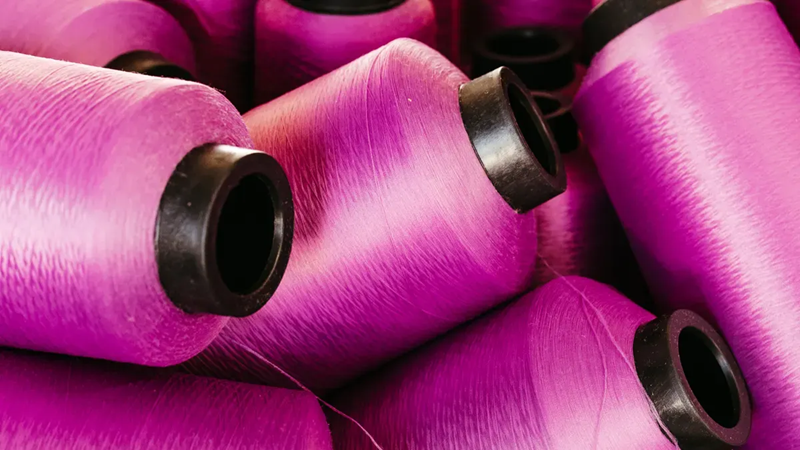
Cotton processing requires precise reactive dye bath management and automated chemical dosing to maintain consistency. Automated dosing systems inject dyes and chemical auxiliaries into the bath according to specific curve profiles.
- Linear Dosing: Adding dye at a constant rate over time, producing excellent levelness and reducing patchiness.
- Progressive Dosing: Starting slowly and increasing rate, reducing cycle time while maintaining acceptable levelness.
Automated dosing provides precise color formulation and consistency. Automation controls temperature, dosing, and timing, reducing manual errors and ensuring uniform dyeing across batches, improving color matching accuracy.
Automated chemical dosing in reactive cotton dyeing generates significant resource savings:
- Salt usage reduced by 30% (e.g., from 80 g/L to 56 g/L for medium shade)
- Alkali usage reduced by 25% (e.g., from 20 g/L to 15 g/L for medium shade)
- Water consumption reduced by 20% (from 80 L/kg to 64 L/kg)
- Effluent TDS load reduced by 30% (from 4500 ppm to 3150 ppm)
Flexible washing cycles remove unfixed reactive dyes following the primary dyeing stage.
| Fabric TypeSoaping / Washing Step Time (to remove unfixed dye) | |
|---|---|
| 100% Cotton | 1.5 – 2 hours |
| Cotton-Polyester Blend (PC/CVC) | 1 – 1.5 hours |
Cone versus Hank Dyeing Configurations
Yarn package density and structural form dictate fluid flow dynamics inside the vessel. Cone package dyeing forces dye liquor through wound bobbins, whereas hank dyeing processes uncompressed skeins under minimal tension to preserve softness.
A modern yarn dyeing machine must support dual-bath versatility and programmable multi-step controls when processing poly-cotton and poly-nylon blends. Processing poly-cotton requires distinct bath conditions for each fiber type.
| StepParameterValue | ||
|---|---|---|
| Polyester dyeing | Temperature | 130°C |
| Polyester dyeing | Time | 45 min |
| Polyester dyeing | pH (Dyacetic DHP) | 4.5–5.0 |
| Polyester dyeing | M:L ratio | 1:10 |
| Polyester dyeing | Dispersing agent | 2 g/L |
| Polyester dyeing | Leveling agent | 2 g/L |
| Cotton dyeing | Temperature | 90°C |
| Cotton dyeing | Time | 45 min |
| Cotton dyeing | pH (soda ash) | 0–5 g/L (adjustable) |
| Cotton dyeing | M:L ratio | 1:10 |
| Cotton dyeing | Glauber’s salt | 20 g/L |
| Reduction clearing | Temperature | 80°C |
| Reduction clearing | Time | 20 min |
| Reduction clearing | Hydros | 2 g/L |
| Reduction clearing | Reducing agent (Siloxin DDA) | 2 g/L |
| Reduction clearing | Caustic soda | 2 g/L |
Two-bath two-step options provide flexible processing sequences:
- Sequence A: Polyester dye → RC → Cotton dye
- Sequence B: Polyester dye → Cotton dye → RC
Automated system controllers execute these multi-step routines to ensure maximum shade repeatability across batches.
Evaluating Key Technical Parameters and Utilities
Heating Methods: Electric versus Steam
Thermal utility selection directly influences plant processing economics and bath ramp rates. Steam heating systems deliver rapid heat transfer across large liquid volumes, making them ideal for high-capacity industrial dye houses. Electric heating elements provide clean, local temperature control for lower vessel volumes where central steam boilers are impractical.
Dye bath operating temperatures strongly dictate total utility expenditures during production runs.
| MethodTemperatureCost per kg of goods (Rs.)Key cost driver | |||
|---|---|---|---|
| High-temperature (conventional) | 90°C | 2.96 | Steam for heating (Rs. 2.17 total) |
| Low-temperature (with TEA) | 30°C | 0.72 | No steam; only chemical cost (TEA Rs. 0.72) |
Lowering operating temperatures eliminates direct steam consumption entirely from the process cycle. This reduction lowers the processing cost per kilogram by approximately 76% compared to traditional high-temperature methods. Plant engineers must align heating hardware directly with available site utilities to minimize thermal losses.
Selecting an Energy-Efficient Yarn Dyeing Machine
Textile mills maximize operational profitability by choosing processing equipment built around liquor ratio efficiency. Selecting an energy-saving yarn dyeing machine reduces total water consumption through optimized internal piping and compact vessel geometries. Operating at low bath ratios minimizes the thermal energy needed to elevate liquor temperatures, directly lowering steam and power expenses.
Automated control systems further streamline utility consumption during continuous production schedules. Microcomputer controllers regulate pump motor frequencies, differential pressures, and chemical dosing sequences automatically. Precise automation eliminates unneeded hold times, shortens total bath cycles, and ensures consistent color levelness across consecutive yarn batches.
Selecting the ideal yarn dyeing machine depends on matching fiber thermomechanical properties, package geometry, and plant heating utilities. Target ultra-low liquor ratios and PLC automation to cut water, steam, and electricity expenses. Finally, mills should execute trial runs using exact yarn package densities and process specifications with equipment suppliers to confirm performance before purchasing.
FAQ
What liquor ratio does an energy-efficient polyester yarn dyeing machine use?
Modern high-temperature high-pressure systems, such as the SHH Singularity model, operate at an ultra-low 1:3 liquor ratio. This setup dramatically cuts total water, steam, and electricity consumption.
Why does polyester yarn require pressurized high-temperature dyeing equipment?
Polyester fibers feature a tight crystalline structure. Pressurized machines reaching 130°C expand the polymer matrix, allowing disperse dye molecules to penetrate deep inside the fiber uniformly.
How does automated dosing improve reactive dyeing for cotton yarns?
Automated chemical dosing injects dyes along precise curves. This control reduces salt usage by 30 percent and alkali by 25 percent while ensuring uniform color consistency across batches.
Post time: Aug-19-2026