
Technical Note: Selecting fabric dyeing machines requires precise tension control, accurate temperature regulation, and optimal liquor ratios.
Open-width processing poses constant mechanical challenges. Engineers evaluate methods of fabric dyeing to prevent fabric distortion. Unlike jet dyeing, sensitive cotton, viscose, silk, and blend goods require smooth transport. Therefore, choosing based on fabric type avoids batch re-works. Plant managers prioritize stability when selecting fabric dyeing machines. A high-performance jig dyeing machine ensures exact speed control. Modern machine controls optimize each dyeing cycle. Efficient fabric dyeing machine operations deliver uniform jig dyeing quality across every fabric type.
Key Takeaways
- Modern jig dyeing machines use electronic drives to control tension and prevent fabric damage.
- Engineers adjust machine speed and temperature settings for each specific fabric type.
- Enclosed machine designs save energy and water while delivering consistent color quality.
Key Features of a Modern Jig Dyeing Machine
Choosing the right equipment requires evaluating core mechanical components. Modern textile plants rely on advanced engineering to maintain stability during every dyeing run. High-performance machinery incorporates automated drive systems, precise liquor distribution, and controlled heating zones. These integrated components protect sensitive materials from physical damage during open-width transport.
Drive Systems and Constant Tension Control
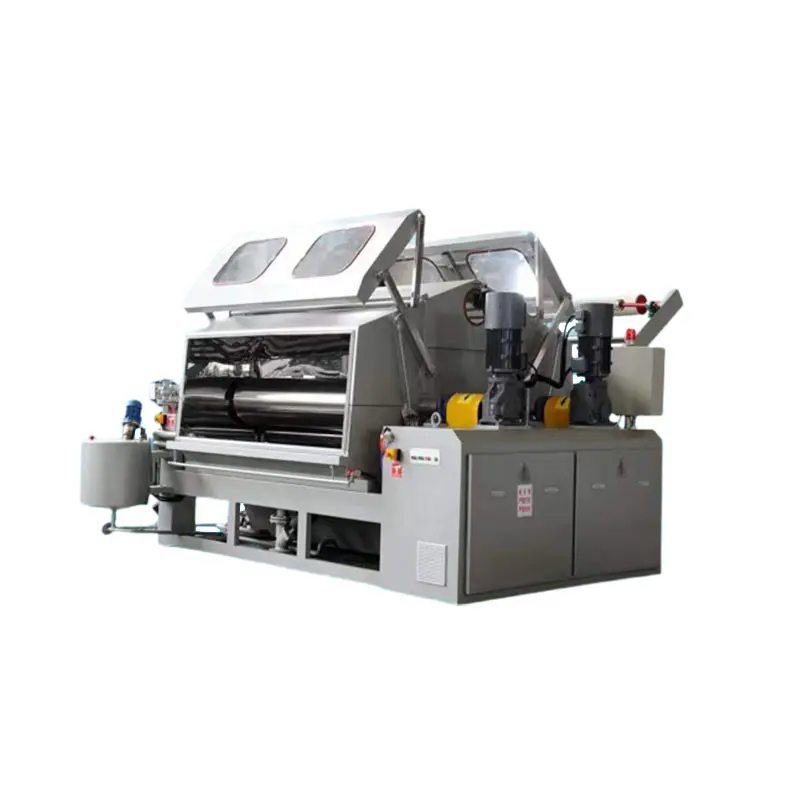
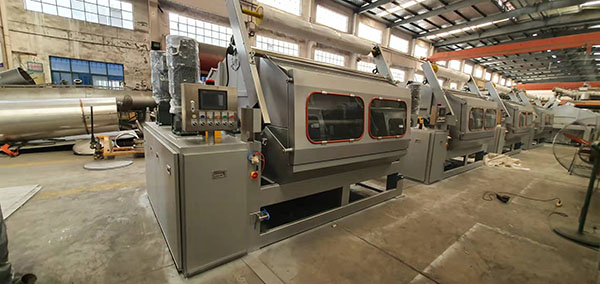
Advanced drive systems serve as the foundation of modern jig dyeing machine designs. Older mechanical drives often struggle with uneven winding pressure. In contrast, dual-frequency converter drive technology utilizes two Yaskawa 7.5KW frequency converters. A high-reliability Omron PLC controller manages these converters with microsecond precision. Operators monitor all process values through an intuitive 10-inch WEINVIEW colorful touch screen.
[PLC Controller] ---> [Dual Yaskawa 7.5KW Converters] ---> [Main Rollers (325mm Dia)]
                              |
                     (Real-Time Feedback)
                              |
          [Constant Linear Speed: 2–130 m/min]
          [Constant Tension Control: 0–60 kg]
This electronic system maintains a constant linear speed ranging from 2 to 130 meters per minute. Simultaneously, it holds fabric tension steady between 0 and 60 kilograms. Precise tension control prevents material elongation during the jig dyeing cycle.
Key Takeaway: Dual-frequency converters prevent physical distortion on delicate woven goods. Precise tension control ensures identical shade depth across the entire roll.
Automated functions further streamline modern fabric dyeing machine operations. Built-in line recording tracks passage counts automatically. Auto-reverse mechanisms handle smooth head-back movements without human intervention. The machine decelerates and stops automatically when completing predefined passes. Additionally, a full-line automatic swing feature moves the fabric roll continuously sideways. This lateral oscillation eliminates edge buildup and guarantees flat winding across industrial applications. These features increase overall production efficiency while preserving sensitive fabric quality. Engineers can easily adjust machine performance parameters to match specific fiber properties.
Liquor Ratios and Automated Dosing
Uniform liquor contact remains essential for level shade yield. A modern fabric dyeing machine integrates dedicated fluid management hardware to control dyestuff penetration. Stainless steel chemical barrels store process additives safely. An integrated stainless steel circulating pump moves liquid constantly through the dye bath solution. This forced circulation maintains uniform temperature and liquor concentration across the entire vessel width.
| Component | Technical Specification | Operational Benefit |
|---|---|---|
| Circulating Pump | High-Grade Stainless Steel | Eliminates chemical concentration gradients |
| Chemical Barrel | SUS304 Corrosion-Resistant | Enables automated additive dosing |
| Main Dye Vessel | SUS316L Stainless Steel | Resists reactive dyes and acid liquor |
Consistent fluid movement improves dye bath chemistry throughout extended runs. Jig processing demands exact chemical application to prevent side-to-center shade variation. Automated dosing systems feed chemicals into the main vessel gradually. This controlled rate prevents spotty fixation on raw goods. Proper liquor circulation helps engineers optimize quality on difficult fiber blends. Furthermore, reduced bath volumes lower total water usage significantly. Plant managers achieve reliable batch consistency without sacrificing color quality. This precise fluid control supports high-volume production schedules.
Enclosed Hoods and Temperature Control
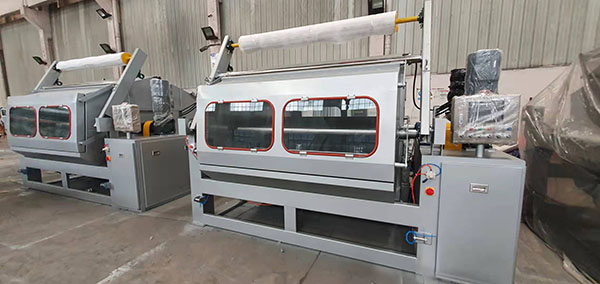
Thermal management directly influences dye uptake rates. A state-of-the-art fabric dyeing machine features a fully sealed top hood structure. Pneumatic cylinders operate the side cover system smoothly for daily access. Top thermal insulation piping covers the upper chamber to reduce heat dissipation. This enclosed construction locks in steam and holds processing temperatures reliably between 0 and 100°C.
+-------------------------------------------------------+
|             Insulated Upper Cover (SUS316L)            |
|  [Pneumatic Valve Controls]   [Thermal Insulation]     |
|-------------------------------------------------------|
|  Main Roller (325mm)          Main Roller (325mm)     |
|          \                          /                 |
|           \-- Fabric Path (1800mm) -/                 |
|                     |                                 |
|            [Dyeing Tank: SUS316L]                     |
+-------------------------------------------------------+
Material durability determines long-term equipment value in harsh wet processing. The main rolling roller uses heavy-gauge SUS316L stainless steel with a 325mm diameter. The machine accommodates a maximum rolling diameter of 1200mm, a total roller width of 2000mm, and an effective fabric width of 1800mm. SUS316L stainless steel also constructs the main dyeing tank and upper cover for maximum chemical protection. Meanwhile, corrosion-resistant SUS304 stainless steel forms the frame, chemical barrel, rack, and electrical control cabinet. Schneider electrical components and AKS encoders ensure long-term machine reliability across demanding textile applications.
This robust hardware setup creates a stable dyeing environment for demanding factory runs. Consistent thermal retention speeds up color fixation across every fabric surface. Efficient insulation reduces total energy consumption during daily fabric processing. Plant managers maintain steady production while meeting strict environmental standards. Choosing a fully enclosed fabric dyeing machine secures long-term operational success.
Matching Fabric Dyeing Machine Settings to Materials
Substrate properties dictate physical machine parameters during open-width processing. Every fabric type demands specific mechanical adjustments to guarantee level shade production without causing structural deformation. Choosing based on fabric type allows textile engineers to fine-tune speed, bath temperature, and roll tension settings. Modern jig machinery offers high operational flexibility, ensuring total process compatibility across diverse fiber categories.
+------------------+-----------------------+---------------------+-----------------------+
| Fabric Substrate | Penetration Time      | Target Tension Range| Critical Machine Setting|
+------------------+-----------------------+---------------------+-----------------------+
| Cellulosic Cotton| Fast (1–2 seconds)    | Moderate (20–40 kg) | High Circulation Speed|
| Regenerated Viscose| Slow (2–4 seconds)   | Ultra-Low (<15 kg)  | Gentle Acceleration   |
| Delicate Silk    | Moderate (1.5–2 sec)  | Minimal (5–10 kg)   | Smooth Surface Rollers|
| Synthetic Blends | Variable (2–3 seconds)| Controlled (15–30 kg)| Forced Pump Pressure  |
+------------------+-----------------------+---------------------+-----------------------+
Cotton Fabrics: Penetration Time and Temperature
Heavy woven cotton demands rapid fluid absorption inside the immersion vessel. Cellulosic fibers require a short dye bath penetration time between 1 and 2 seconds. High-speed liquor contact forces dyestuff deep into tight yarn intersections during each pass.
[Fabric Path in Dye Bath]
       |
       v (1-2 Seconds Penetration)
+----------------------------------------+
| Dye Bath Solution (95-100°C)           |
| (Forced Penetration via SUS316L Tank)  |
+----------------------------------------+
Elevated bath temperatures around 95°C to 100°C accelerate dye molecule diffusion across thick woven structures. Unlike jet dyeing, which can create surface friction marks on heavy cotton, modern jig machinery maintains constant open-width transport. This mechanical configuration supports consistent batch production schedules. Plant managers optimize quality by holding dye compatibility stable throughout elevated temperature cycles.
Operational Insight: Cellulosic cotton fibers require fast bath penetration to prevent center-to-edge shade variation during high-speed passes.
Viscose Fibers: Low-Tension Mechanics
Regenerated cellulose fibers lose significant mechanical strength when wet. Regenerated viscose swells rapidly in aqueous solutions, increasing its susceptibility to surface tearing and longitudinal distortion. Consequently, liquor penetration requires 2 to 4 seconds due to this structural swelling. Engineers must apply low-tension mechanics to protect wet viscose webs during open-width transport.
The double frequency converter drive system reduces pulling forces down to minimal levels. Lowering roll tension below 15 kilograms prevents permanent elongation along the fabric selvedges. Additionally, gradual acceleration and deceleration ramps eliminate sudden physical jerks during head-back shifts. These precise adjustments separate advanced methods of fabric dyeing from older mechanical processes. Controlled processing yields superior physical stability across all regenerated fiber batches.
[Tension Control: <15 kg] ---> [Dual Yaskawa Converters] ---> [Zero Fabric Elongation]
Silk and Blends: Surface Care in Jig Dyeing
Delicate silk and complex fiber blends require delicate surface handling inside the fabric dyeing machine. Filament silk strands suffer from surface chafing under harsh mechanical movement. Therefore, smooth drum surfaces and low-tension settings shield fragile yarns against physical friction. Comparing jig dyeing vs jet dyeing highlights significant advantages for delicate surfaces; jet dyeing often generates excessive liquor turbulence, whereas a specialized jig fabric dyeing machine moves goods smoothly through a stationary dye liquor bath.
                                 /---> [Cotton/Poly Blend] ---> (Uniform Color Yield)
[Stainless Steel Circulating Pump]
                                 \---> [Silk/Viscose Blend] ---> (Chafing-Free Surface)
Processing blended fibers requires accurate chemical distribution across both fiber components. An integrated stainless steel circulating pump moves fluid constantly through the dye bath solution. Continuous circulation guarantees complete chemical dye compatibility across multi-component fabrics. This uniform movement ensures equal dyestuff exposure on mixed fiber yarns.
Selecting effective methods of fabric dyeing depends heavily on proper fluid movement. Controlled batch dyeing keeps surface quality intact while achieving target color depth. The continuous circulation pump prevents chemical precipitation on sensitive silk surfaces. Proper fluid dynamics protect fine fabrics across various industrial applications. Modern machines deliver exceptional surface protection across diverse blended fiber runs.
Operational ROI and Machinery Evaluation
Plant managers calculate long-term investment returns before selecting fabric dyeing machines. Efficient hardware reduces utility bills and increases overall daily output.
Energy Efficiency and Water Consumption
An enclosed fabric dyeing machine minimizes thermal losses during heating cycles. Sealed hood covers keep steam inside the chamber. Consequently, lower liquor bath volumes reduce water consumption significantly. Selecting fabric dyeing machines with smart thermal controls saves energy. Lower energy usage directly lowers operational costs per kilogram of processed material. Consistent thermal management also protects color quality across every run. High energy efficiency maximizes total processing profitability.
Component Durability and Maintenance Requirements
Durability directly affects maintenance frequency in industrial applications. High-grade SUS316L stainless steel prevents chemical corrosion inside the main vessel. Selecting fabric dyeing machines with heavy-duty rollers prevents unexpected mechanical downtime. Reliability ensures continuous fabric production without interruption. Modern drive components lengthen machine service life significantly. Long component lifespan secures consistent quality across high-volume processing schedules. Plant engineers maintain target production output effortlessly with stable machine hardware. Selecting fabric dyeing machines built from corrosion-resistant steel lowers routine repair expenses.
Final Specification Checklist
Engineers must review technical capacity parameters for specific plant demands. Choosing based on production scale optimizes factory layout and operational efficiency. Matching vessel dimensions to your production scale prevents processing bottlenecks. Also, expanding your production scale requires accurate capacity planning. A versatile fabric dyeing machine handles various structural specifications. Consider these important notes when selecting fabric dyeing machine models.
| Machine Type | Working Width Range | Maximum Batch Diameter |
|---|---|---|
| HTHP Jigger | Up to 2000 mm | 800 mm – 1100 mm |
| Standard Jigger | 1250 mm – 3400 mm | N/A |
| CP Dyeing Batcher | N/A | Up to 1500 mm |
Carefully selecting fabric dyeing machines depends on target batch width and volume demands. Right machinery choices align production scale targets with long-term commercial growth in textile applications.
Key Takeaway: Selecting fabric dyeing machines with advanced automation guarantees consistent quality and long-term ROI.
A modern jig dyeing machine delivers precise tensionless control and optimal thermal efficiency. Plant managers achieve exceptional quality across every batch by selecting fabric dyeing machines that match specific substrate requirements. Reviewing important notes when selecting fabric dyeing machine models protects delicate goods and prevents structural fabric distortion. Furthermore, choosing based on production scale aligns your target production scale with daily operational goals. Selecting fabric dyeing machines correctly optimizes overall fabric dyeing machine efficiency and maximizes total production output.
FAQ
Why is selecting fabric dyeing machines critical for every fabric type?
Technical Insight: Selecting fabric dyeing machines requires evaluating fiber properties. Modern methods of fabric dyeing demand precise tension controls to prevent structural yarn distortion.
How does jet dyeing compare when selecting fabric dyeing machines?
Unlike jet dyeing, an open-width jig machine processes woven goods under constant linear speed. Selecting fabric dyeing machines with stable drives optimizes traditional methods of fabric dyeing.
How does production scale impact selecting fabric dyeing machines?
Matching target production scale parameters requires evaluating roll capacity. Plant engineers scale production output efficiently by selecting fabric dyeing machines where each machine features high-efficiency drive components.
Post time: Jul-30-2026